


Do Steam Showers Use a Lot of Water and Electricity? Real Cost Per Session
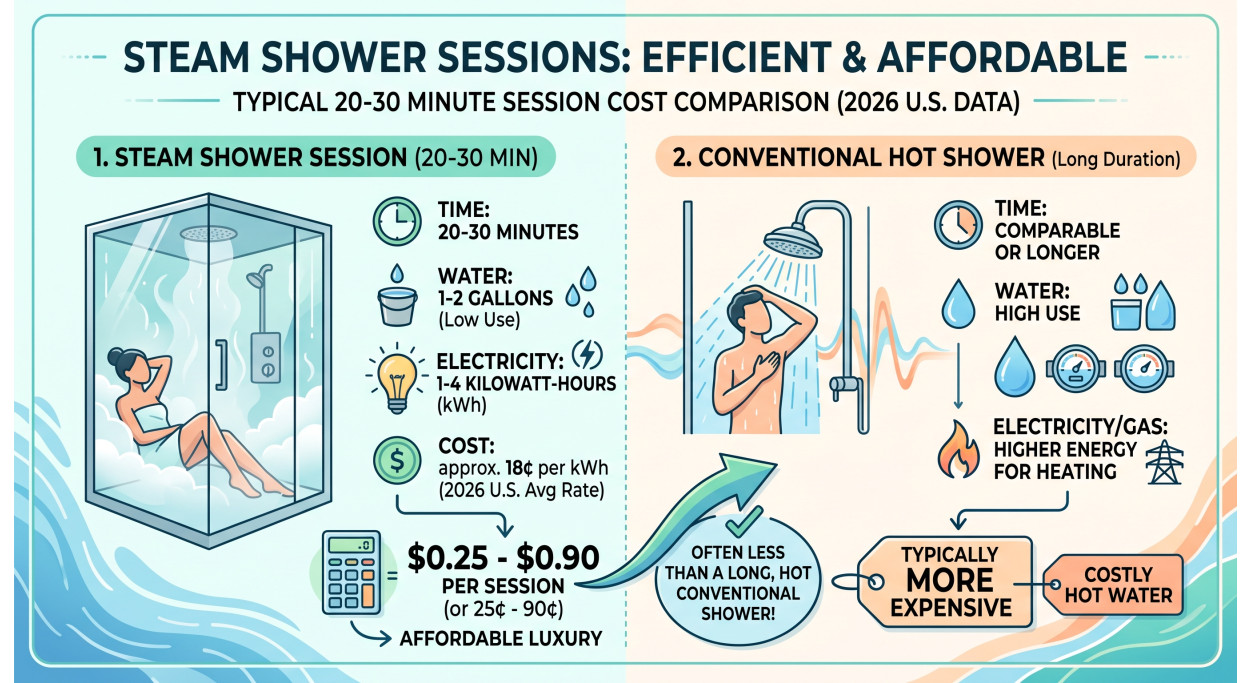
Quick answer: No. A typical 20–30 minute steam shower session uses only about 1 to 2 gallons of water and roughly 1 to 4 kilowatt-hours of electricity. At the 2026 U.S. average residential electricity rate of about 18 cents per kWh, that works out to roughly 25 cents to 90 cents per session — often less than the cost of a long, hot conventional shower.
If you have already read our guide on how much a steam shower costs to purchase and install, the natural next question is what it costs to run. The good news: operating costs are one of the most pleasant surprises of steam shower ownership. Below we break down the actual water and electricity numbers, show the math, and compare a steam session to a regular shower so you can judge for yourself.
How Much Water Does a Steam Shower Use?
A steam generator works by boiling a small amount of water into vapor, so it needs surprisingly little of it. Most residential steam sessions convert about 1 to 2 gallons of water into steam over 20 to 30 minutes.
Compare that with a conventional shower. A standard 2.5 gallon-per-minute showerhead uses 50 gallons in 20 minutes. Even a water-saving 2.0 GPM WaterSense head uses 40 gallons in the same time.
| Shower type (20-minute use) | Water used |
|---|---|
| Steam shower session | 1–2 gallons |
| Low-flow shower (2.0 GPM) | 40 gallons |
| Standard shower (2.5 GPM) | 50 gallons |
In other words, steaming uses roughly 95–97% less water than showering for the same amount of time. Many owners actually reduce their total water use after installing a steam shower, because a steam session followed by a brief rinse replaces one long hot shower.
How Much Electricity Does a Steam Shower Use?
Electricity is the main operating cost, and it depends on the size of the steam generator:
- Self-contained steam shower cabins — like the all-in-one units we carry at Steam Showers 4 Less — use compact built-in generators, commonly in the 3 kW to 6 kW range. All of our steam showers require a dedicated 240V circuit; confirm the exact electrical spec on the individual product page.
- Custom-built tiled steam rooms use larger standalone generators, typically 7.5 kW to 15 kW, because they must fill a bigger, less tightly sealed space.
Here is the key detail most articles miss: a generator's kilowatt rating is its maximum draw, not its constant draw. The generator runs at full power during the initial heat-up (usually 5–10 minutes), then cycles on and off to maintain temperature. Actual consumption over a session is well below the rated power multiplied by the session length.
| Generator size | Typical use | Est. electricity per 30-min session* | Est. cost at 18¢/kWh |
|---|---|---|---|
| 3 kW | Self-contained steam shower cabin | 1.0–1.5 kWh | $0.18–$0.28 |
| 6 kW | Larger cabin / small custom enclosure | 2.0–3.0 kWh | $0.37–$0.55 |
| 9 kW | Custom tiled steam room | 3.0–4.5 kWh | $0.55–$0.83 |
| 12 kW | Large custom steam room | 4.0–6.0 kWh | $0.73–$1.10 |
*Estimates include heat-up plus 20 minutes of steaming with normal thermostat cycling. Sessions in a well-sealed cabin land at the low end of each range; cold rooms, long sessions, and leaky enclosures push toward the high end.
According to the U.S. Energy Information Administration, the average U.S. residential electricity rate in mid-2026 is about 18.3 cents per kWh, ranging from roughly 13 cents in the cheapest states to more than 50 cents in Hawaii. To estimate your own cost, multiply the kWh figure above by the rate on your utility bill.
What Does a Steam Shower Cost Per Session?
Putting water and electricity together at national-average utility rates:
- Electricity: $0.20–$0.85 for most home setups
- Water: about 2 cents (2 gallons at typical combined water/sewer rates)
Total: roughly $0.25 to $0.90 per session for the vast majority of home steam showers. Even a large 12 kW custom steam room rarely exceeds $1.25 per session at average rates. That is less than a single cup of gas-station coffee for a spa experience in your own bathroom.
Steam Shower vs. Regular Shower: Which Costs More to Run?
Here is the comparison that surprises most people. A conventional hot shower has two hidden costs: the water itself, and the energy your water heater burns to heat it. A 20-minute shower at 2.0 GPM sends about 26 gallons of heated water down the drain, which takes roughly 4 to 5 kWh from an electric water heater.
| Estimated cost (20–30 min) | Water | Energy | Total |
|---|---|---|---|
| Steam shower session (3–6 kW cabin) | ~$0.02 | $0.20–$0.55 | ~$0.25–$0.60 |
| 20-min hot shower (electric water heater) | $0.40–$0.55 | $0.75–$0.90 | ~$1.15–$1.45 |
The takeaway: a steam session typically costs the same or less than a long hot shower, and dramatically less water. If a steam session replaces some of your shower time rather than adding to it, your utility bills may barely move at all — a point worth remembering when you are weighing whether a home steam shower is worth it.
Monthly and Annual Operating Costs
For a household using the steam shower once a day for 25–30 minutes at average 2026 electricity rates:
- Self-contained cabin (3 kW): roughly $6–$9 per month, or about $70–$110 per year
- Larger cabin (6 kW): roughly $12–$17 per month
- Custom steam room (9–12 kW): roughly $17–$30 per month
Use it three times a week instead of daily and those numbers drop by more than half. For most owners, the steam shower adds less to the electric bill than a second refrigerator.
5 Ways to Lower Your Steam Shower Operating Costs
- Right-size the generator. An oversized generator wastes energy; an undersized one runs constantly. Our guide on how to choose a steam shower generator walks through sizing.
- Keep the enclosure sealed. Self-contained cabins hold steam efficiently by design. In custom rooms, gaps and uninsulated walls make the generator cycle far more often.
- Descale on schedule. Mineral buildup on the heating element forces longer run times. Regular flushing keeps efficiency high — and replacement elements and other components are available in our steam shower parts department if yours ever wears out.
- Steam first, rinse briefly. A steam session followed by a 2–3 minute rinse uses a fraction of the water and heating energy of a 20-minute hot shower.
- Check for off-peak rates. If your utility offers time-of-use pricing, an evening steam session may cost 30–50% less than one at peak hours.
Frequently Asked Questions
Will a steam shower noticeably raise my electric bill?
For most households, no. Daily use of a typical self-contained unit adds roughly $6–$9 per month at average U.S. rates — usually only a few percent of a normal electric bill, and partly offset by shorter hot showers.
Does a steam shower use my home's hot water heater?
No. The steam generator draws cold water from your supply line and heats it internally to create steam. Your water heater is only involved when you use the unit's regular shower function to rinse off.
What electrical circuit does a steam shower need?
All Steam Showers 4 Less units require a dedicated 240V circuit, installed by a licensed electrician with proper GFCI protection. Each product's specification sheet lists the exact amperage requirement for that model.
How much does a 30-minute steam session cost?
Typically between 25 and 90 cents at 2026 average utility rates, depending on generator size, how well the enclosure holds steam, and your local electricity price.
Is a steam shower cheaper to run than a hot tub or sauna?
Generally, yes. A steam session only draws power while you use it, whereas hot tubs heat and filter water around the clock. Traditional saunas also heat a larger air volume to much higher temperatures, which usually takes more energy per session.
The Bottom Line
Steam showers are remarkably inexpensive to operate: a gallon or two of water and well under a dollar of electricity per session for most homes. Once installed, the running cost is closer to a rounding error than a utility burden.
Ready to bring the spa home? Browse our full selection of steam showers, explore financing options, or call our steam shower experts toll-free at 1-800-791-8232 with questions about any model's water and electrical requirements.