



Steam Shower vs. Infrared Sauna: Which Should You Buy in 2026?
Quick answer: Choose a steam shower if you want moist heat, respiratory and skin benefits, and a unit that replaces your existing shower — adding zero net footprint to your home. Choose an infrared sauna if you prefer dry heat, have a spot with no plumbing access, and want a dedicated wellness room separate from your bathroom. For most homeowners upgrading a bathroom, the steam shower wins on practicality because you already shower every day.
Infrared saunas are one of the most searched home wellness products of 2026, so it is a fair question: should your budget go to steam or infrared? The two deliver heat in fundamentally different ways, and that difference drives everything else — the experience, the benefits, the installation, and the cost. Here is the full comparison.
How the Heat Works: Moist vs. Dry
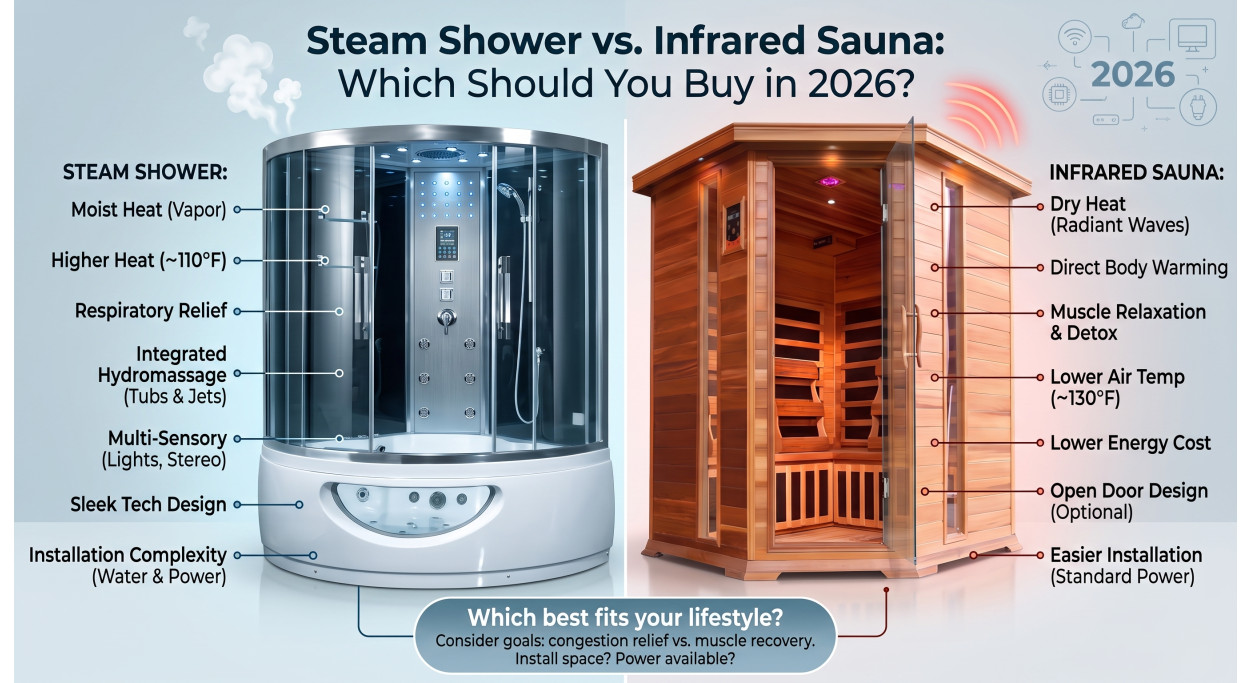
A steam shower uses a steam generator to boil water into vapor, filling a sealed enclosure with warm mist at roughly 100–120°F and close to 100% humidity. The moist heat feels enveloping, opens airways, and hydrates the skin.
An infrared sauna uses infrared heating panels that warm your body directly rather than the air around you. Cabin temperatures run about 120–140°F with very low humidity. You sweat heavily at a lower air temperature than a traditional sauna, but the environment is dry.
Steam Shower vs. Infrared Sauna: Side-by-Side
| Factor | Steam Shower | Infrared Sauna |
|---|---|---|
| Heat type | Moist heat, ~100–120°F, near 100% humidity | Dry radiant heat, ~120–140°F, low humidity |
| Typical session | 15–30 minutes | 25–45 minutes |
| Space required | Replaces your existing shower or tub — no extra floor space needed | Dedicated footprint in a spare room, basement, or gym |
| Plumbing | Standard hot/cold supply and drain (same as any shower) | None required |
| Electrical | Dedicated 240V circuit | Varies by model; smaller units use standard outlets, larger cabins need dedicated circuits |
| Doubles as a shower? | Yes — full shower, jets, and steam in one unit | No — you still shower afterward |
| Best-known benefits | Congestion and sinus relief, skin hydration, muscle relaxation | Deep sweating at lower air temperature, relaxation, warm-up before stretching |
| Typical equipment cost | ~$3,000–$5,500 for a complete self-contained unit | ~$2,000–$7,000+ depending on size and panel type |
Where the Steam Shower Wins
It uses space you already have. A self-contained steam shower installs where your shower or tub sits today, so a bathroom of any size can have one. An infrared sauna always needs its own patch of floor.
You will actually use it daily. The biggest predictor of whether a wellness purchase pays off is frequency of use. Because the steam shower is your shower, the steam function sits one button away from a routine you already do every day. A sauna in the basement requires a separate trip — and a shower afterward anyway.
Moist heat for airways and skin. Steam's humidity is what loosens congestion and leaves skin hydrated rather than dried out — the reason steam has been used for colds and sinus discomfort for generations. We cover this in depth in our guides to steam and respiratory health and steam for skin health.
More than steam. Modern units like our Platinum steam showers bundle acupressure body jets, rainfall heads, chromatherapy lighting, aromatherapy, and Bluetooth audio into the same enclosure — a multi-therapy spa, not a single-purpose box.
Where the Infrared Sauna Wins
No plumbing required. If the only available spot is a garage corner, a bonus room, or a spot with no water line or drain, infrared is the practical choice.
Longer, drier sessions. Some people simply prefer dry heat, or find they can read or stretch comfortably through a 40-minute infrared session in a way that a 100%-humidity environment does not suit.
Lower-commitment installation. Many small infrared cabins assemble in an afternoon and plug in, with no plumber involved.
Can You Get Both Experiences?
Yes. Many wellness-focused homeowners pair a steam shower in the bathroom with a dry-heat session elsewhere — and if you love wet heat specifically, a dedicated steam sauna gives you a larger steam-room experience. For a deeper look at how wet and dry heat compare physiologically, see our guide to the health benefits of saunas vs. steam.
The Verdict for 2026
If you are renovating a bathroom, want daily wellness benefits with zero added footprint, and value moist heat for breathing and skin, the steam shower is the stronger buy. If you have a plumbing-free space and specifically want long, dry sweat sessions, infrared earns its spot. Budget-wise the two overlap heavily, so let the heat type and the location decide.
Frequently Asked Questions
Is a steam shower or infrared sauna better for congestion?
Steam. The warm, humid air of a steam session is what helps loosen mucus and soothe airways; infrared's dry heat does not provide that moisture.
Which uses more electricity, steam or infrared?
Per session they are comparable. A typical home steam session uses roughly 1–4 kWh; infrared sessions often run longer at lower draw, landing in a similar range. Neither will move your electric bill dramatically with normal use.
Does an infrared sauna replace a shower?
No — you still need to rinse off after sweating. A steam shower combines both functions in one enclosure, which is its core practical advantage.
Which adds more value to a home?
A steam shower is a permanent bathroom fixture that appears in listing descriptions and stays with the house, while many infrared saunas are movable furniture. For resale impact, the built-in fixture generally carries more weight.
Is steam or infrared heat safer?
Both are considered safe for healthy adults when sessions are kept to recommended lengths and you stay hydrated. Anyone who is pregnant or has a heart or blood-pressure condition should check with a physician before regular heat therapy of either kind.
Ready to Compare Models?
Browse our complete lineup of steam showers and steam saunas, or call our team toll-free at 1-800-791-8232 — we are happy to talk through which heat experience fits your home and routine.